

Posting Assistant was built to help Wisdom’s revenue specialists process insurance payments faster and with less manual work. We used OCR and LLMs to parse scanned EOBs, payment docs, and denial details, then surfaced that information in a structured workflow that made posting easier and faster. Later, we integrated with Open Dental, which helped reduce manual posting time by 40%.
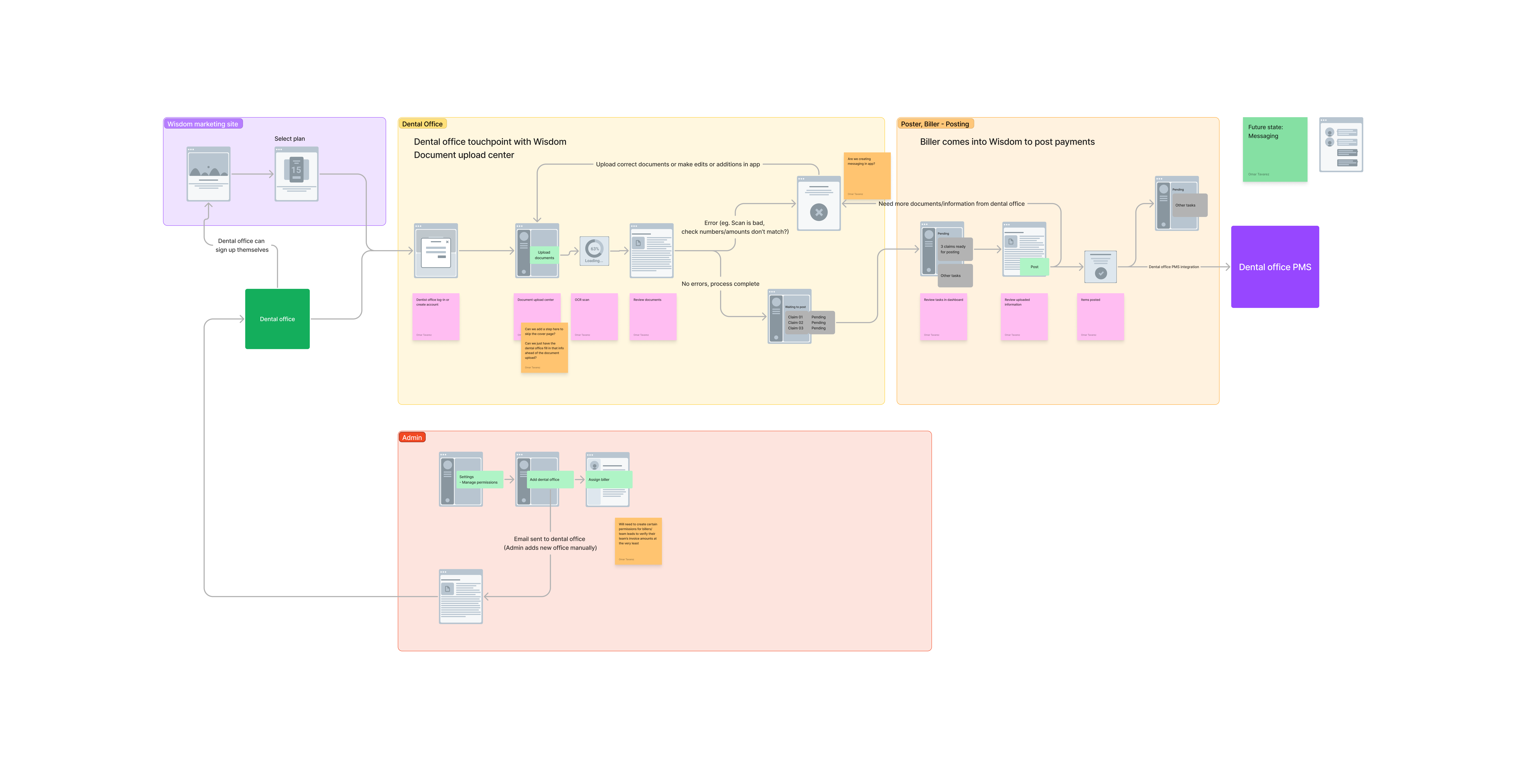
Payment posting was one of those workflows that looked simple from the outside, but once you really got into it, it was messy and time-consuming.
Insurance documents came in all kinds of formats. Some were clean, some were hard to read, some had missing context, and a lot of them required interpretation. Revenue specialists had to look through the document, figure out what happened, understand why something was or wasn’t paid, and then manually enter that information into another system.
It was a very manual process, and it also required a lot of attention to detail. People were constantly switching between screens, comparing information, and making judgment calls. That made the work slower, harder to scale, and more mentally draining than it needed to be.
We saw an opportunity to make that whole process better by extracting the important information up front and giving specialists a workflow that supported the way they already worked.
I led the design of Posting Assistant end to end, from discovery and workflow definition through prototyping, interface design, and iteration. I worked closely with product and engineering, conducted user research, and helped define how we would measure the workflow before and after launch.
I also set up observational research using OBS Studio so we could watch revenue specialists work across multiple monitors in their real environment and understand where time and effort were being lost.
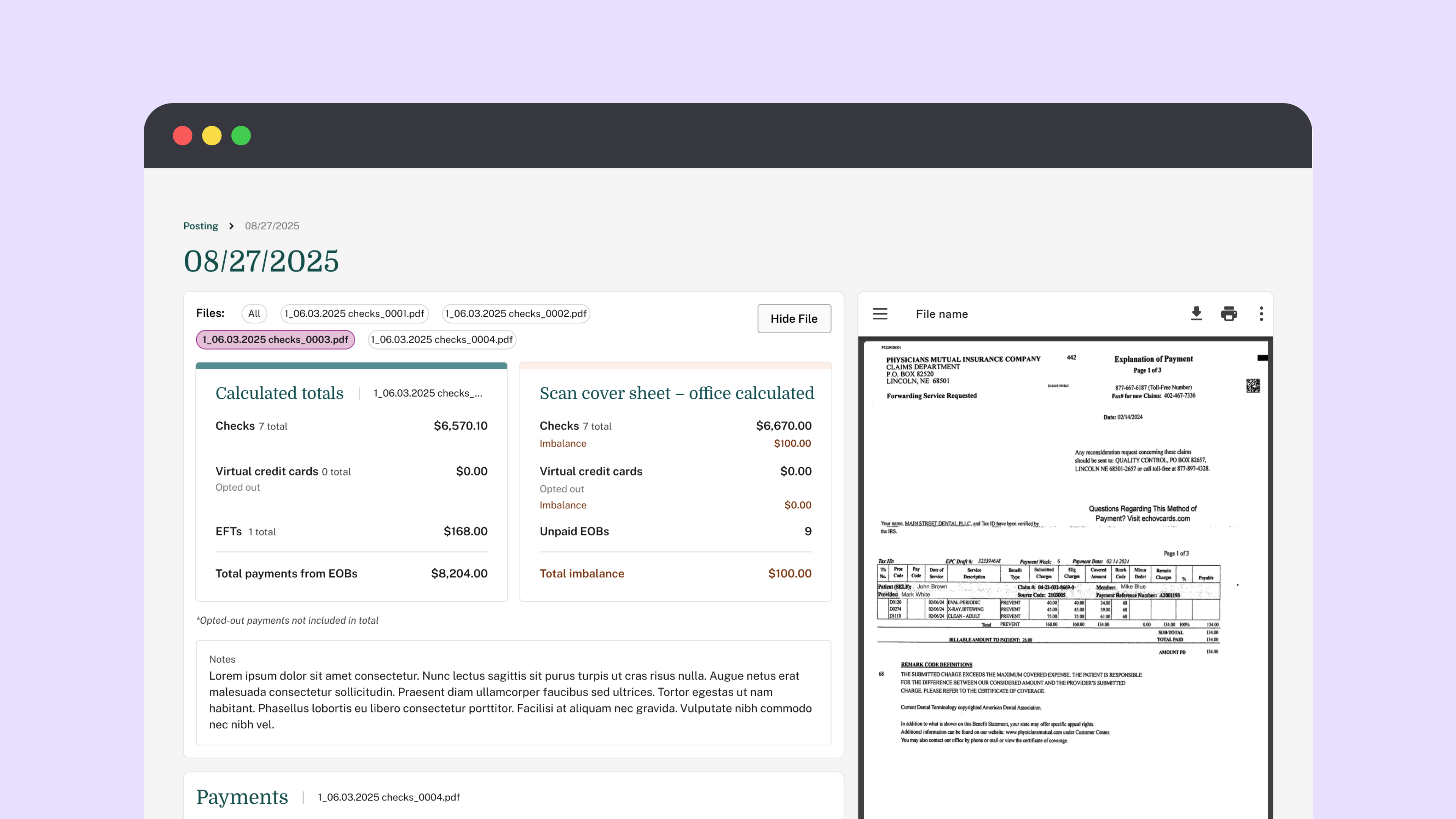
Instead of jumping straight to full automation, we started with an assistive workflow. OCR and LLMs extracted key information from scanned insurance documents, and the product surfaced that information in a way revenue specialists could quickly review and act on.
This approach helped us:
Once the workflow proved value, we extended it through Open Dental integration, which removed more manual work and drove a meaningful time savings.
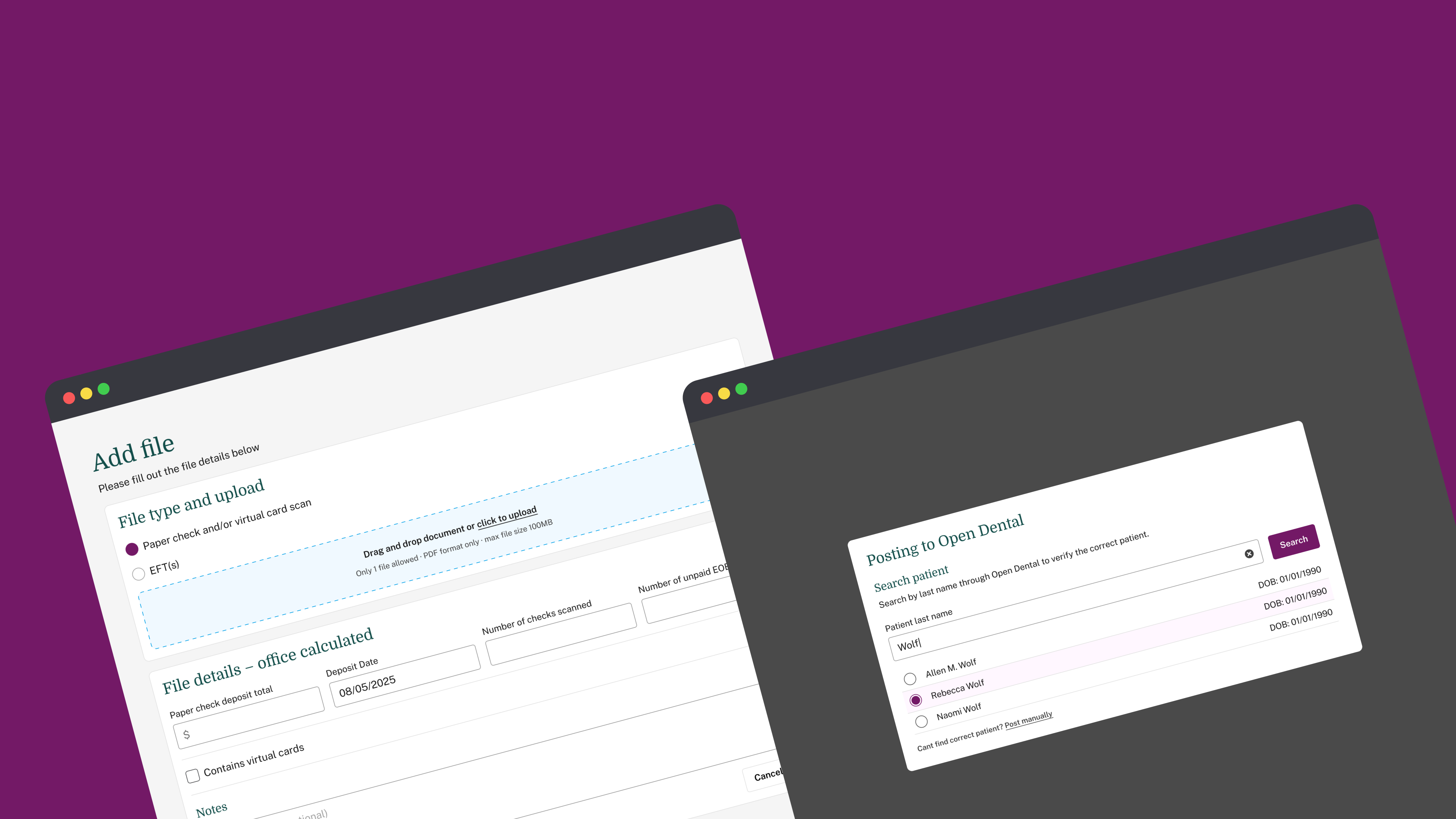
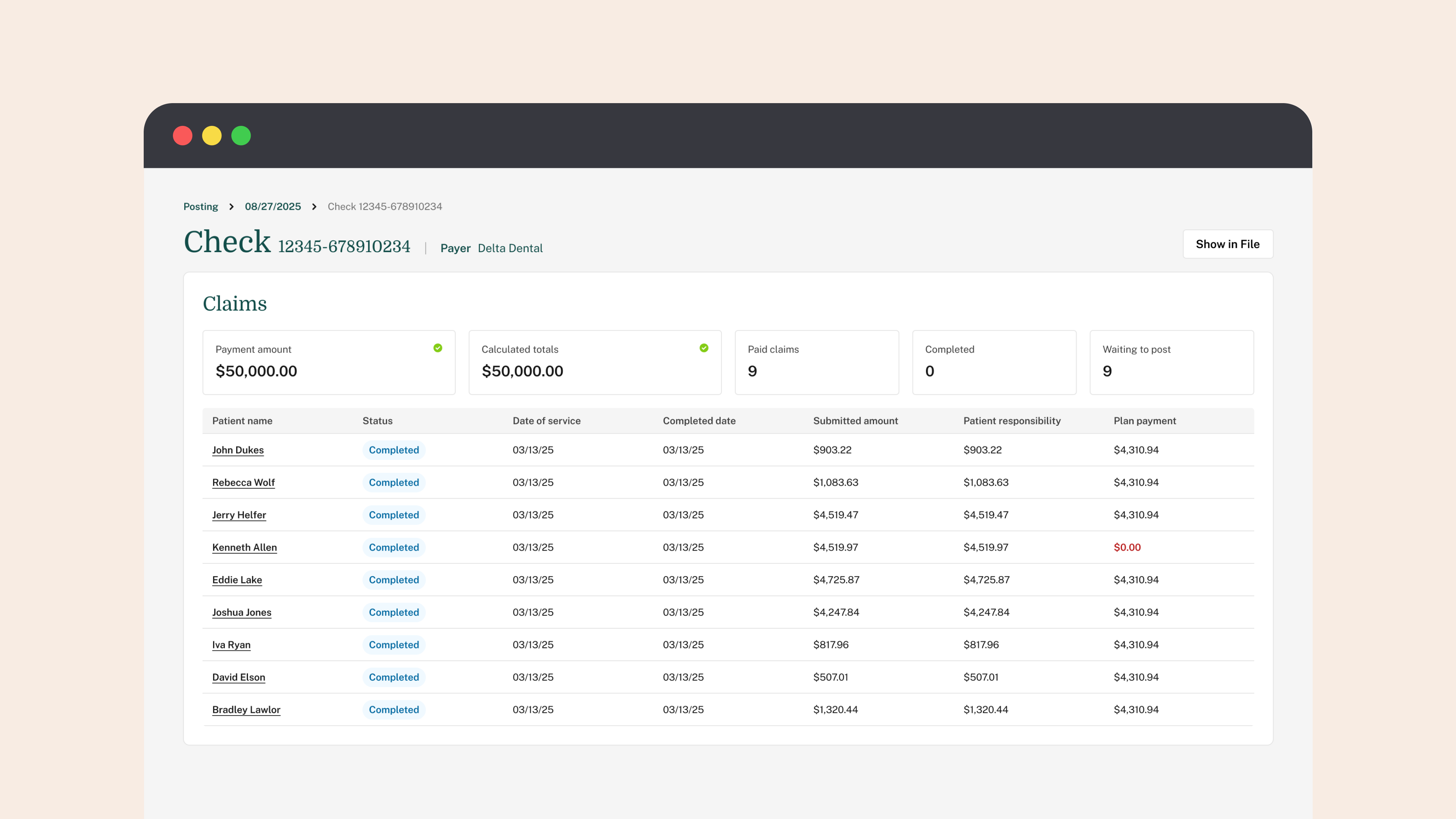
The biggest outcome was the reduction in manual posting time. Once we introduced the product and later integrated with Open Dental, we were able to cut manual posting time by about 40%.
The product reduced how much specialists had to manually read, interpret, and re-enter on every task. Instead of starting from a blank slate every time, they were working from structured information that was already surfaced for them.
By making the workflow more efficient, Posting Assistant helped the team handle more volume without relying on more manual effort to get there.
The first version helped prove the value and establish trust. That made it possible to keep improving the experience and automate more over time.
